
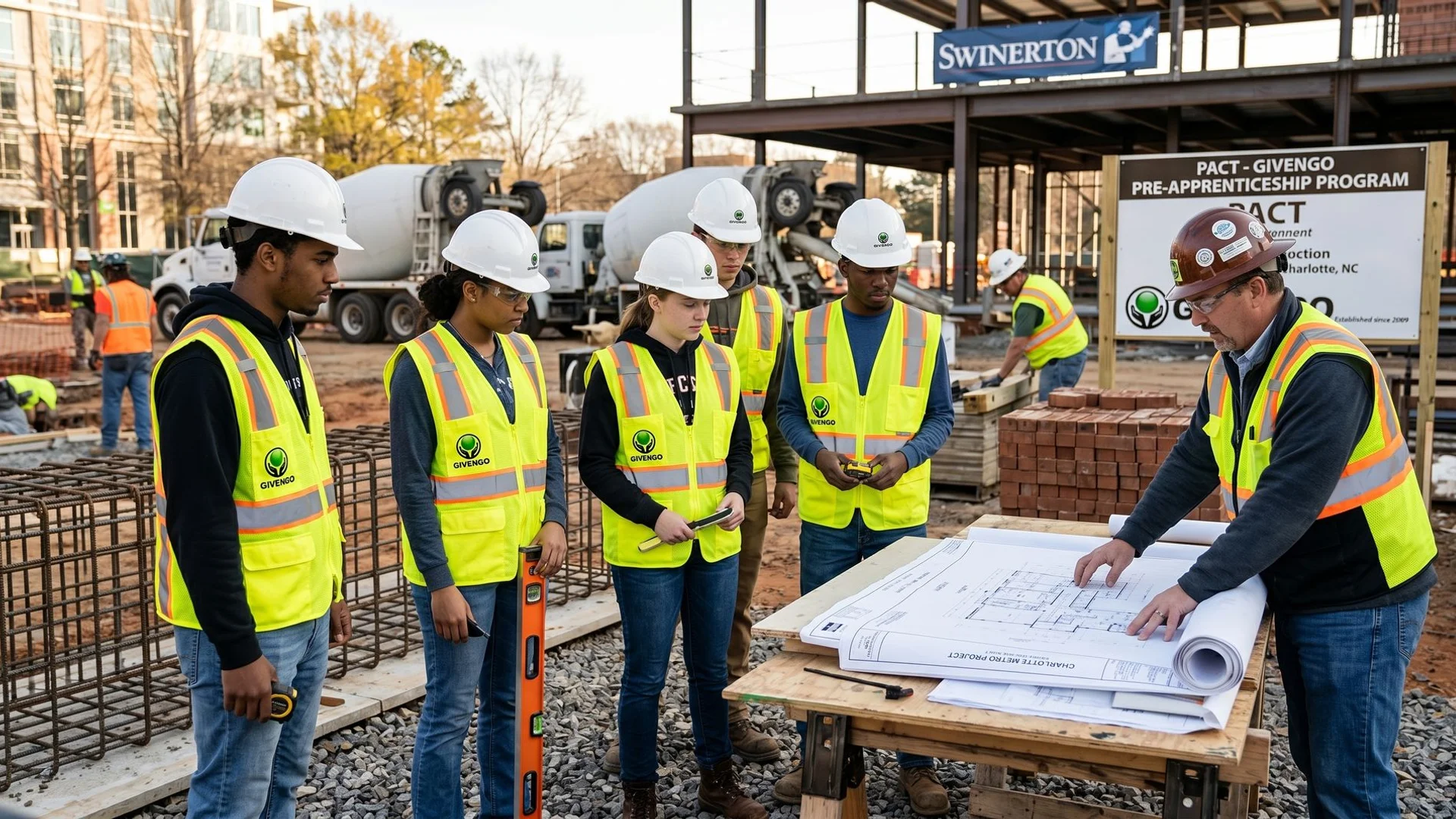
Find PACT Pre-Apprenticeship Training in Charlotte
PACT is a USDOL-recognized pre-apprenticeship framework that combines classroom learning with 75% work-based training. GiveNGo connects Charlotte-Mecklenburg youth and adults with partner training providers that deliver it.
The Pre-Apprenticeship Certificate Training (PACT) framework is built on national construction training standards and recognized by the U.S. Department of Labor. Partner providers deliver the training and the credential. GiveNGo helped secure $100,000 to launch PACT in Charlotte and connects youth 14 to 17, justice-involved individuals and adults seeking a career change with programs that fit their goals.
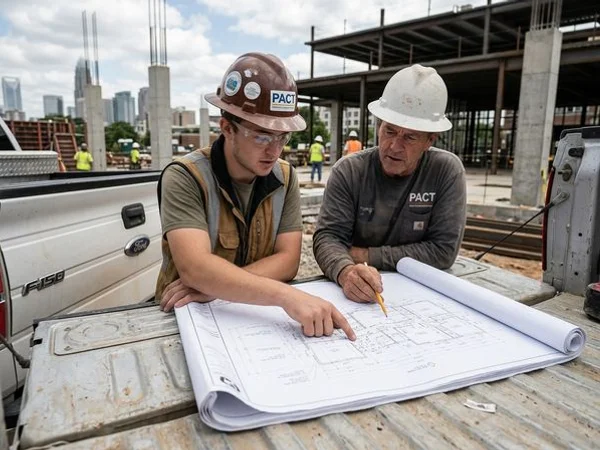
What a PACT-model program looks like
Charlotte-area construction is growing, with new data centers and healthcare facilities going up across the region. That growth creates a real opening for youth and adults who want to train for careers in the skilled trades. PACT is one of the fastest ways to take a first step.
GiveNGo does not teach PACT. Partner training providers deliver the framework and the credential. GiveNGo helped secure $100,000 to launch PACT in Charlotte and connects people, families and referring organizations with those providers.
The U.S. Department of Labor recognizes the PACT framework, so an employer reviewing a participant’s record sees a federally recognized credential, not just a course certificate.
Who PACT is for
PACT was developed by the Home Builders Institute (HBI). Programs in Charlotte-Mecklenburg are designed for youth ages 14 to 17, with adult options available for participants 18 and older. The framework serves court-referred youth, returning citizens and people who do not fit neatly into a traditional vocational program.
Eligibility is set by each provider and reviewed case by case. HBI reports a national job placement rate of 80% for PACT graduates. The U.S. Department of Labor also honored the framework with a Registered Apprenticeship Innovator and Trailblazer Award.
People are connected to PACT-model programs through several local channels. Referrals can come from:
- Charlotte-Mecklenburg Schools (CMS) counselors
- Probation or court officers
- NCWorks workforce centers
- Families and individuals using the website contact form
Costs vary by provider. Some partner programs are tuition-free for eligible participants. Ask the provider, and we will help you find options.
How the 25/75 model works
A PACT-model program splits time between 25% classroom learning and 75% work-based or community-service hours. The classroom side builds a foundation before anyone picks up a power tool. Quality programs cover topics such as:
- Construction fundamentals and blueprint reading
- Proper tool and materials handling
- Trade-introduction modules for carpentry, electrical and plumbing
- OSHA 10 safety training
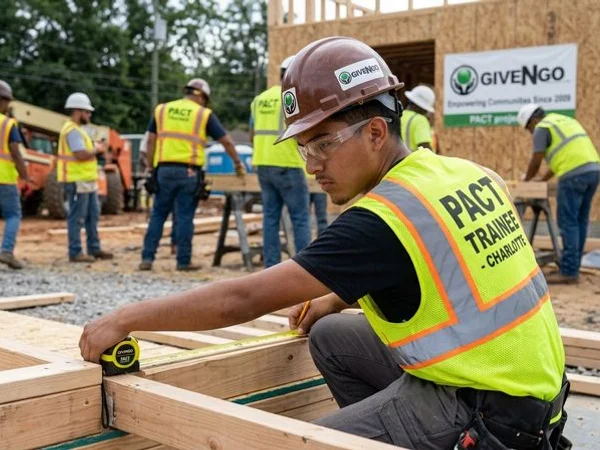
Safety training matters to Charlotte contractors, since it reduces onboarding time and risk. The work-based side puts participants on active job sites with mentor supervision.
Hours logged on those sites can count toward the credential and toward future apprenticeship eligibility. That ratio is the point of the model. A pre-apprenticeship without real work experience is just a regular class.
What participants can earn
Providers set their own offerings, but a PACT-model program typically includes a mix of hard skills, safety training and personal development. Look for a program that offers:
- A portable USDOL-recognized credential. The credential is designed to travel across employers and states.
- OSHA 10 safety completion. Many Charlotte construction employers ask for it.
- First-aid and CPR exposure. Basic emergency response is a standard job-site expectation.
- Trade-introduction hours. Logged hours can count toward future apprenticeship eligibility.
- Life Skills Training (LST). Decision-making, conflict resolution and workplace soft skills.
- Family support. Some programs use the Guiding Good Choices framework to offer resources to parents of youth participants.
After PACT
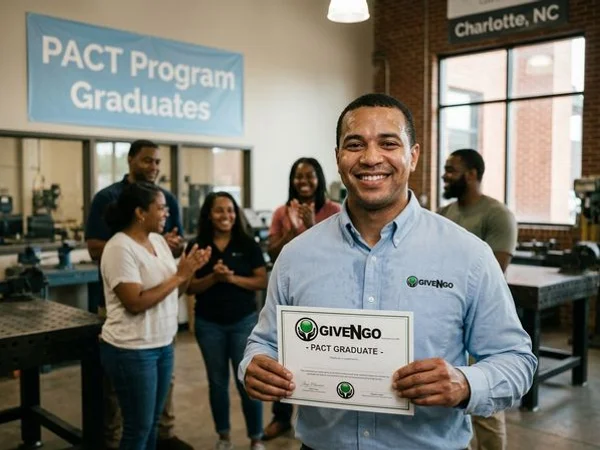
PACT-model programs are designed to lead toward Registered Apprenticeships, internships or entry-level employment. Common construction paths include HVAC, electrical, plumbing and carpentry. GiveNGo helps participants and families look at those next steps through our partner network.
Stacking credentials for success
Many people stack additional NCCER coursework on top of a pre-apprenticeship, since NCCER is widely accepted across North Carolina contractors. The pathway alignment guide from the Home Builders Institute (HBI) is a useful tool for planning the sequence that fits your goals.
Why PACT vs NCCER
People often ask how these two respected frameworks differ. NCCER is an industry-association credential, while the U.S. Department of Labor recognizes PACT as an official pre-apprenticeship framework. Each serves different career goals.
Federal recognition is a major differentiator if you are aiming at a Registered Apprenticeship pathway. Many local employers value both, but federal recognition can matter for union or federal projects.
| Feature | The PACT Framework | The NCCER Credential |
|---|---|---|
| Primary Type | Official Pre-Apprenticeship | Industry-Association Credential |
| Federal Status | USDOL Recognized | Private Industry Standard |
| Best Used For | Registered Apprenticeship Entry | General Contractor Hiring |
| Reported Placement Rate | 80% nationally (reported by HBI) | Varies by Specific Program |
The PACT vs NCCER comparison guide has a full side-by-side breakdown to help you make an informed decision.
How GiveNGo helps
GiveNGo connects people with partner providers. We do not run the training. Tell us what you are looking for, and we will match you with a partner provider that fits your schedule, eligibility and funding options. You then move forward with support from the provider and from us.
In programs GiveNGo helped launch with partner providers, 18 participants were served, 7 graduated and 3 were placed in jobs. See the Impact page for more.
Get connected or refer a student
Whether you are a parent, school counselor, court worker, returning citizen or prospective participant, the first step is simple. Use the Contact page to tell us about your goals or to refer a student. We will follow up to talk through options with you.
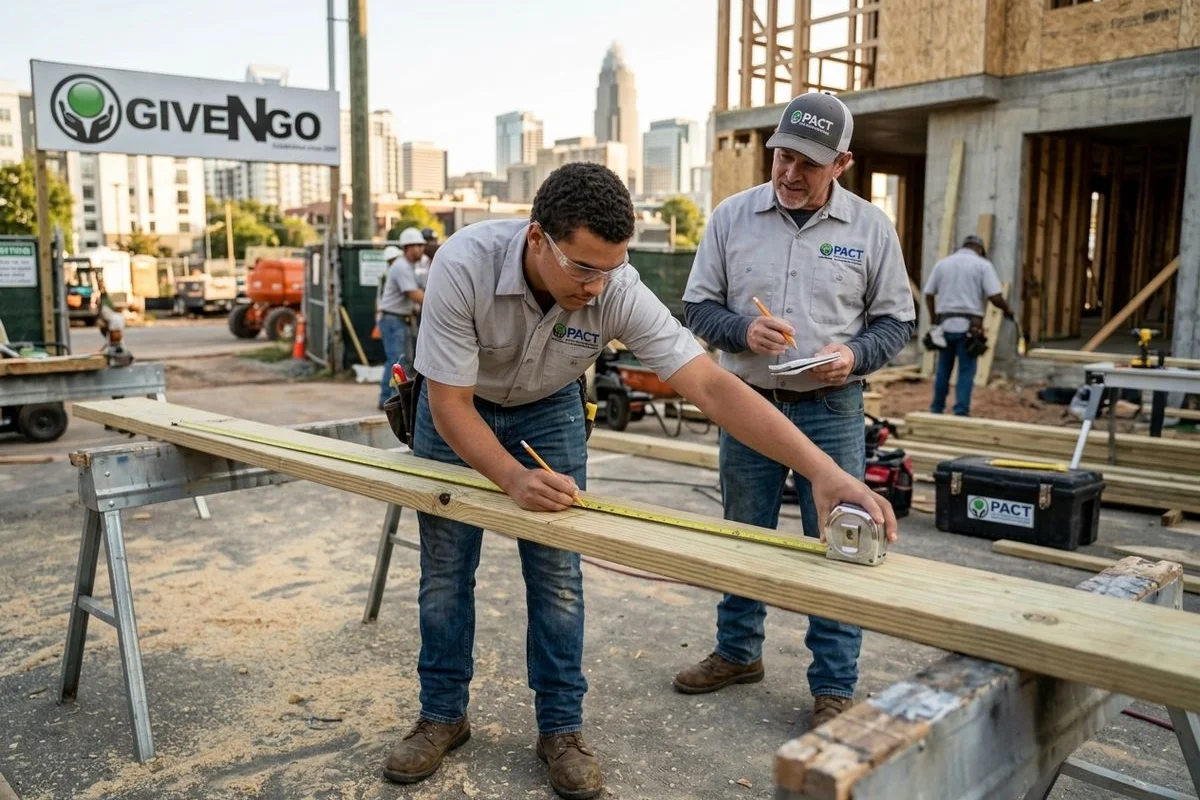
What a PACT-model program typically covers
- • USDOL-recognized pre-apprenticeship framework
- • 25% classroom learning, 75% community-service and work-based training
- • Construction fundamentals, safety, first aid, tools and materials
- • Carpentry, electrical and plumbing basics plus green building practices
- • Life Skills Training (LST) and Guiding Good Choices parent support
- • Pathways toward Registered Apprenticeships and entry-level work
How to get connected
Tell us your goals
Use the Contact page to tell us what you are looking for, or to refer a student as a school counselor, court worker or agency partner.
We review fit
We look at age, schedule, goals and what funding may be available. Providers typically involve a parent or guardian for youth.
Get matched
We match you with a partner provider that delivers a PACT-model program and fits your situation.
Move forward with support
Work with the provider on the next steps toward the credential, apprenticeship or entry-level work. We stay in touch.
Connecting People and Opportunities
Building partnerships that create real impact in Charlotte-Mecklenburg.

Ready to Get Connected?
We help connect individuals with the right opportunities through our partner network.
PACT: Common Questions
Answers about getting connected with PACT-model programs and partner providers.
Does GiveNGo teach PACT?
Is PACT recognized nationwide?
How do I get started?
How much does PACT cost?
Do I need a high school diploma?
How is PACT different from a trade school?
Can probation officers and other agencies refer participants?
How much of a PACT-model program is hands-on?
Explore More Pathways
HVAC Training
Find HVAC training options in Charlotte. Quality programs cover refrigeration, controls and EPA 608 preparation.
Apprenticeship pathwayElectrical Training
Find entry-level electrician training options in Charlotte. Quality programs cover NEC code, residential rough-in and OSHA 10.
Framing & finishCarpentry Training
Find carpentry training options in Charlotte. Quality programs cover framing fundamentals, blueprint reading and finish work.
Ready to get connected?
Whether you are looking for opportunities, seeking to partner or wanting to support our mission, we would love to hear from you.