
Life skills and family support in PACT programs
What life skills training, parent engagement and behavioral support typically look like in PACT programs, and how GiveNGo helps you find a partner provider.
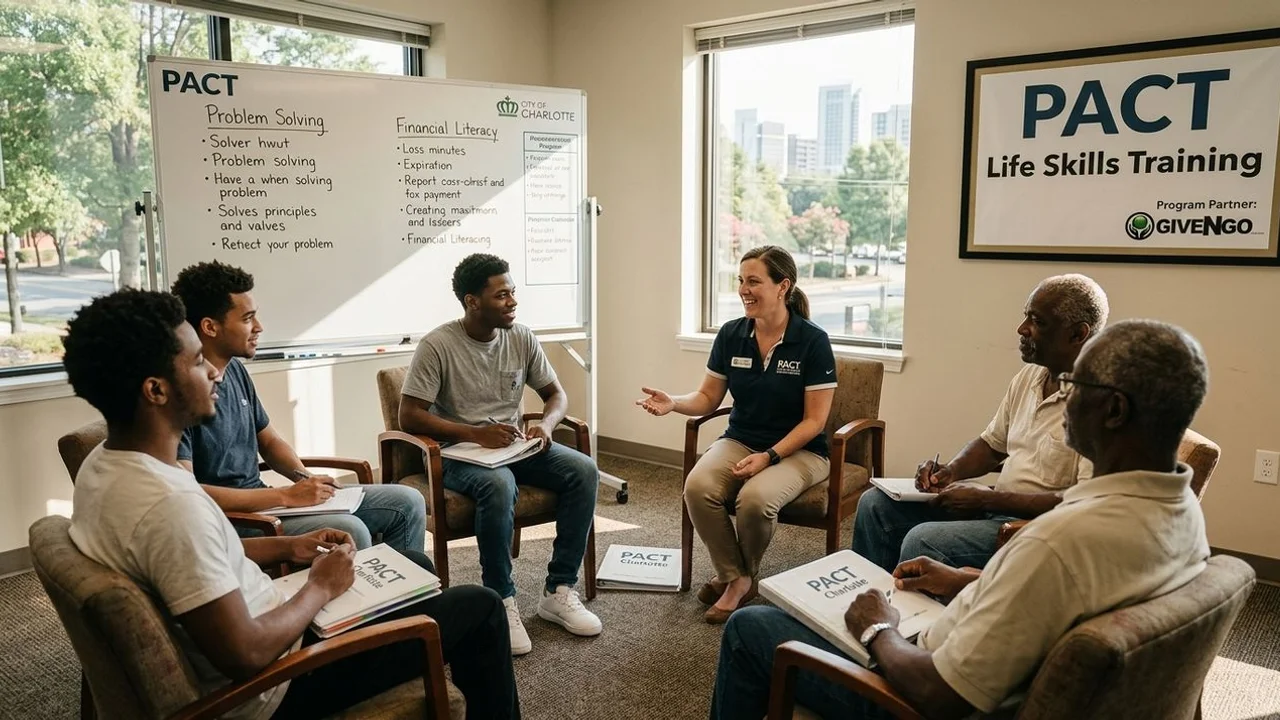
Employers and homeowners want trade professionals who show up on time, communicate clearly and handle stress well. Families often ask what support exists beyond technical training.
Many PACT programs include a support layer made up of Life Skills Training (LST), parent engagement and behavioral support. GiveNGo does not deliver these programs. Partner providers do. This guide explains what quality programs typically offer.
Life skills training
LST is a soft-skills curriculum that runs alongside the technical training. Technical knowledge goes further when a worker can manage conflict and communicate with a supervisor. The 2025 ZipRecruiter Annual Employer Survey found that soft skills such as time management and critical thinking are among the hardest traits to find in new hires.
Look for a program with sessions on:
- Decision-making: A pause, think, choose framework for high-pressure situations.
- Conflict resolution: Handling workplace disagreements, family stress and peer pressure.
- Goal-setting: Short and long-term goals tied to real milestones.
- Workplace soft skills: Time management and owning a mistake.
Guiding Good Choices (parent training)
For participants under 18, many programs invite parents or guardians into a structured family-engagement curriculum such as Guiding Good Choices. It was developed by the Social Development Research Group at the University of Washington and runs for five sessions. Topics usually include:
- Setting clear expectations for school and work.
- Recognizing and responding to risk behaviors.
- Building family bonds and consistent communication.
- Helping teens resist peer pressure.
Whether parent participation is required depends on the provider, so ask early.
Behavioral support
Behavioral support is usually an informal but steady mentoring system meant to catch small problems before they end a participant's progress. According to US Department of Labor data, fewer than 35 percent of people who start an apprenticeship complete it, which is why early support matters.
A good provider has a clear way to respond when someone needs more than mentoring:
- Check-in: A quick, direct conversation to find the root cause.
- Resource matching: Connecting the participant with local community resources.
- External referral: A handoff to specialized professionals when the need goes beyond the program.
Why this layer matters
National workforce data points to childcare gaps, transportation problems and financial hardship as common reasons people leave apprenticeships. Programs that plan for those obstacles tend to keep more participants.
| Common dropout cause | What quality programs do |
|---|---|
| Family instability or housing pressure | Family support and parent engagement |
| Unmanaged behavioral issues | Consistent mentoring and outside referrals |
| Court-condition conflicts | Schedule flexibility and coordination |
| Loss of motivation in the first hard week | Goal-setting and regular check-ins |
How family support connects to credentials
Support helps participants finish, and finishing is what earns the credential. Participants who complete a PACT program typically earn the USDOL-recognized PACT credential, log hands-on hours and move toward apprenticeships or jobs. An evaluation of the American Apprenticeship Initiative reported that pre-apprentices saw a 92 percent increase in earnings after completing their programs.
In person and virtual
Delivery format depends on the provider. Many programs run mainly in person and add virtual sessions when work, school or transportation gets in the way. Ask providers about options such as evening virtual check-ins for working parents and recorded sessions for makeup work.
How GiveNGo helps
GiveNGo does not run training. We connect people in Charlotte-Mecklenburg with partner training providers.
- Tell us what you are looking for.
- We match you with a partner provider that fits your schedule, eligibility and funding options.
- You move forward with support from our team.
Get matched with a provider. Requirements, costs and start dates vary by provider, and we cannot promise acceptance, funding or placement.
Common Questions
Is parent training mandatory?
What does Life Skills Training cover?
Are sessions in person or virtual?
Ready to find a PACT provider?
Tell us what you are looking for and we will match you with a partner provider. Requirements and costs vary by provider.