
Welding processes, tools and safety: what to look for in training
MIG, TIG and stick processes, AWS-aligned skills and OSHA welding safety, plus how GiveNGo connects you with partner welding training providers in Charlotte.
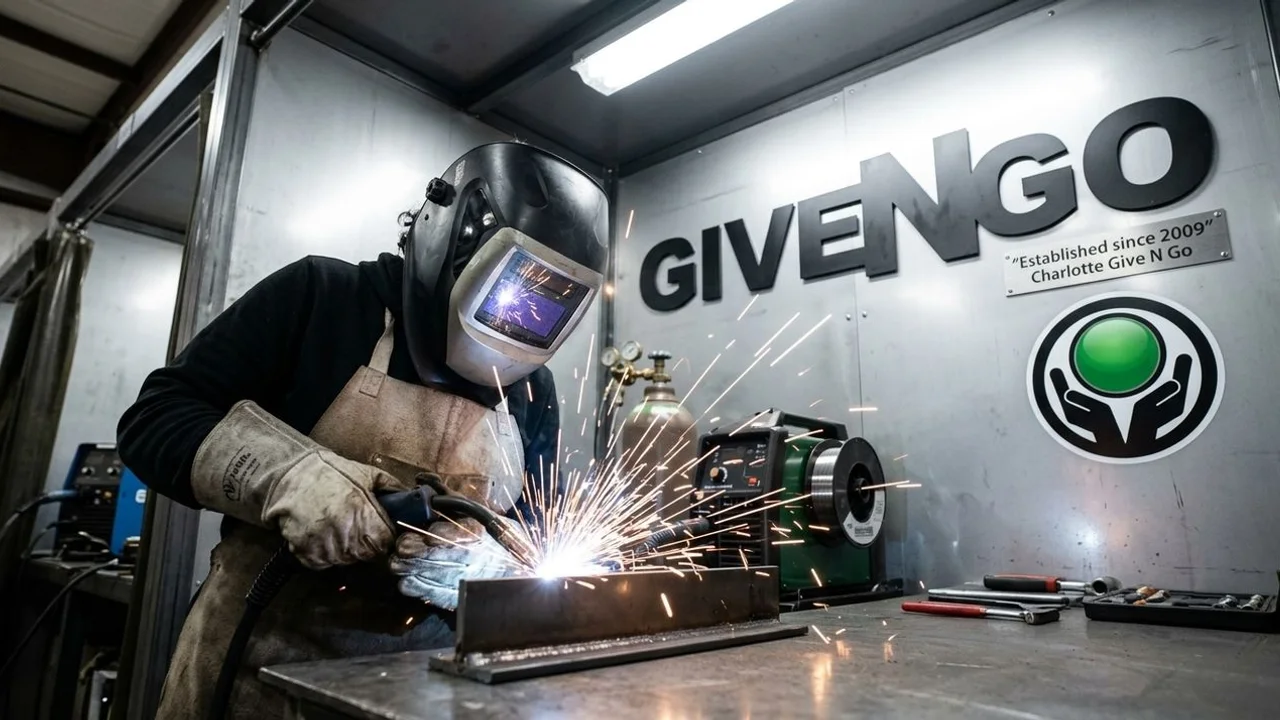
Welding looks simple from the outside. In practice, the gap between a temporary fix and a permanent repair comes down to process choice, setup and safety habits. This guide explains the three core processes, MIG (GMAW), TIG (GTAW) and stick (SMAW), and what a quality welding training program should cover.
GiveNGo does not teach welding. We connect people with partner welding training providers in Charlotte-Mecklenburg. Use this guide to know what to look for before you talk to a provider.
Safety and booth setup: what to look for in a welding training program
A quality program covers safety before you ever strike an arc. Proper preparation prevents serious injuries and costly delays.
- PPE: Expect an auto-darkening helmet, leather sleeves and gloves, steel-toe boots and ear protection. Ask the provider what is supplied and what you buy yourself.
- Booth setup: Proper curtain placement protects bystanders from flash burns. Fume extraction and ventilation should meet OSHA requirements for welding and cutting.
- Electrical hazards: Stinger handling and work clamp placement affect arc stability. Voltage awareness prevents severe shocks.
- Hot work: Fire watch protocols call for a designated person with an extinguisher and all combustibles removed from the area.
Many pathways also include OSHA 10 construction safety training. Ask each provider whether it is part of the program.
MIG (GMAW)
MIG is the starting point for most beginners. Wire-feed welding uses a continuous solid wire electrode and a shielding gas to protect the weld pool. It allows fast, clean repairs on common materials like fencing and lawnmower decks.
- Setup: A common choice for standard steel is ER70S-6 wire with a 75% argon and 25% CO2 gas mixture, which helps limit spatter.
- Joints: Quality programs have you practice flat, horizontal, vertical and basic overhead positions.
- Bead control: Travel speed, torch angle and weave technique affect the strength of the finished weld.
- Common defects: Porosity, undercut and lack of fusion compromise structural integrity.
A good program teaches you to spot these defects early, before they cause a failure or expensive rework.
Stick (SMAW)
Stick welding is an older method that remains effective in the field. It suits structural fabricators and work on heavy farm equipment or rusted gates. It also works outdoors, because wind can blow away the shielding gas used in other methods.
| Rod selection | Tensile strength | Best application |
|---|---|---|
| 6010 | 60,000 psi | Deep penetration through rust and dirt. |
| 6011 | 60,000 psi | Similar to 6010 but runs on AC power sources. |
| 7018 | 70,000 psi | Structural-style joints needing high strength. |
- Arc strike: Learn both tap and scratch starts to ignite the electrode.
- Bead control: Correct arc length, angle and travel speed take a steady hand.
- Structural-style joints: Common configurations include lap, fillet and butt joints.
TIG (GTAW) introduction
TIG is the precision process. Businesses use it for restaurant stainless steel counters, custom aluminum fabrication and code-quality work. Many programs introduce it after MIG and stick.
- Tungsten preparation: A 2% ceriated tungsten electrode gives good arc stability. Grinding angle and point integrity matter.
- Filler rod handling: Feeding the rod with one hand while controlling the torch with the other takes coordination.
- Gas flow and torch angle: Proper shielding gas flow keeps the weld clean, and a high-frequency start limits contamination.
- Stainless and aluminum exposure: These metals behave differently under heat than mild steel.
TIG is the hardest process to master. A training program can introduce the core concepts, but real skill comes from years of regular practice.
What to know about AWS standards and certification
Quality welding programs align their skill checkpoints to American Welding Society (AWS) standards. Formal certification usually happens separately, through an apprenticeship, an accredited test facility or employer-sponsored testing. Ask any provider which credentials students can sit for and what they cost.
Codes such as AWS D1.1 for structural steel are updated over time, so ask providers how their instruction stays current with the code employers use.
Career paths
The American Welding Society has projected a shortage of 330,000 welding professionals by 2028. Welders work in several sectors:
- NC manufacturing: Production roles are often MIG-heavy and require fast repetition.
- Structural fabrication: These jobs involve larger projects and lean heavily on stick welding.
- Pipe welding: Combo certifications combining a stick root with a TIG fill and cap pay a premium.
- Maintenance and repair: Mixed processes and strong diagnostic skills are needed to fix broken machinery on the spot.
ZipRecruiter data from 2026 shows an average pay of around $56,310 a year, or about $27 an hour, for North Carolina welding professionals. For more wage detail, see welder careers and pay in NC.
How GiveNGo helps
GiveNGo does not run training. We connect you with partner training providers in Charlotte-Mecklenburg.
- Tell us what you are looking for, including your goals, schedule and any eligibility questions.
- We match you with a partner provider that fits your schedule, eligibility and funding needs.
- You move forward with support as you contact the provider and get started.
Ready to begin? Get matched with a provider.
Common Questions
Does GiveNGo teach welding?
Will I be AWS certified?
Which process is most useful?
How do I get started?
Is welding dangerous?
Ready to find welding training?
GiveNGo connects you with partner welding training providers in Charlotte-Mecklenburg. Tell us what you are looking for and we will help you find a fit.