
Electrician careers and pay in Charlotte, NC
What electricians do in Charlotte, how the path from apprentice to journey to master works, and how pay is shaped by experience and credentials. GiveNGo connects you with partner training providers.
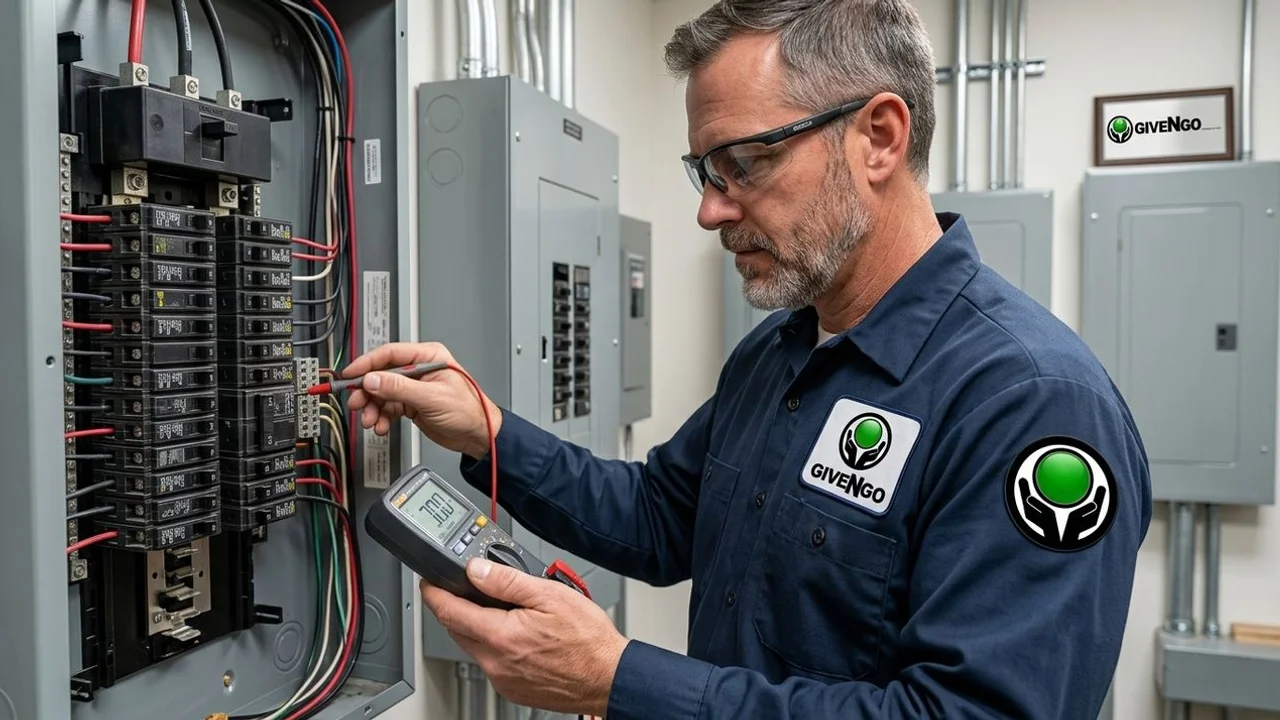
Charlotte's rapid growth keeps electrician demand strong across multifamily, commercial new construction and data centers. People weighing the trade ask what electricians really earn and how the career ladder works.
Figures here are estimates from public sources. Actual pay varies by employer, certifications, location, union or non-union status and benefits.
Pay by stage
ZipRecruiter market data for 2026 puts the average journey electrician salary in the Charlotte metro at about $66,474 per year. Pay scales with apprenticeship year and licensing.
- Apprentice: Wages start lower and step up each apprenticeship year as skills grow. Registered Apprenticeship sponsors publish their own wage scales.
- Journey-level: Earning a journey card brings a significant jump in pay because it shows you can work independently.
- Master electrician: Master-level electricians often lead crews and handle complex troubleshooting, and typically earn more than journey-level workers.
For current numbers, check sponsor wage scales and sources such as the US Bureau of Labor Statistics.
Employer mix
The type of project shapes the skills employers need and what they pay. Charlotte has a growing cluster of data center work, including large artificial intelligence infrastructure projects, and those sites draw skilled electricians. Other employment categories include:
- Residential service: Steady, year-round demand with varied daily tasks.
- Multifamily and commercial new construction: The big pipeline, with sustained volume across the city.
- Industrial: Less common but stable work with manufacturing plants.
- Service and retrofit: Older Charlotte buildings call for strong diagnostic skills.
What drives pay up
Experience and added credentials are the biggest factors. The apprenticeship year is a defined raise step, and a journey card is a major one. Credentials worth knowing about include:
- Specialty credentials: Programmable Logic Controller (PLC) or building automation skills can open higher-paying roles.
- Safety leadership: Moving from an OSHA 10 card to OSHA 30 prepares workers for supervision roles.
- Crew lead skills: Reading blueprints, scheduling teams and mentoring apprentices raise your market value.
- Arc flash training: NFPA 70E training shows commitment to high-voltage safety standards.
Try the earnings estimator
The Trade Career Earnings Estimator lets you plug in years of experience and certifications to see a personal range.
A common pathway
A common Charlotte path starts with a pre-apprenticeship such as PACT or another electrical training program, then moves into a Registered Apprenticeship. See what to look for in electrical training in Charlotte. The standard timeline looks like this:
- Pre-apprenticeship: Foundational safety and tool training.
- Registered Apprenticeship: Working under supervision while taking evening classes.
- Journey card: Passing the state exam for independent work.
- Specialty certification: Adding skills such as PLC programming or high-voltage expertise.
How GiveNGo helps
GiveNGo does not run training. We connect people in Charlotte-Mecklenburg with partner training providers.
- Tell us what you are looking for.
- We match you with a partner provider that fits your schedule, eligibility and funding options.
- You move forward with support from our team.
Get matched with a provider. Requirements, costs and start dates vary by provider, and we cannot promise acceptance, funding or placement.
Common Questions
How long does it take to reach journey level in NC?
Is overtime common for electricians?
Does GiveNGo offer electrician training?
Ready to explore electrical training?
Tell us what you are looking for and we will match you with a partner provider. Requirements and costs vary by provider.