
What electrical apprentice training covers
What to look for in an electrical training program: NEC code basics, residential rough-in, multimeters, conduit benders, OSHA 10 and the pathway into NC apprenticeship.
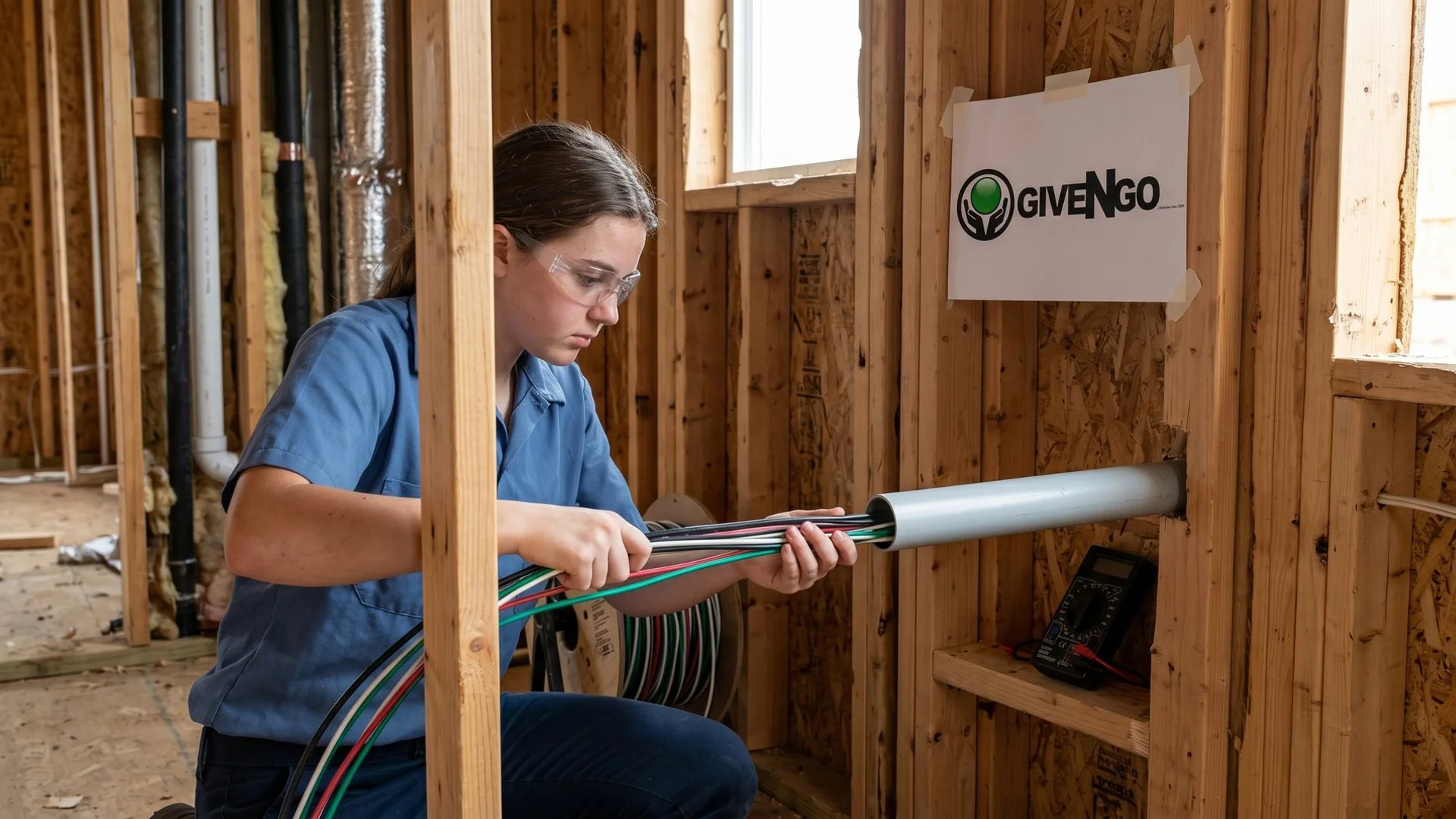
Property owners rely on safe, code-compliant electrical work, and the trade needs new people to carry it forward. If you are considering an electrical career, it helps to know what a good entry-level program covers.
GiveNGo does not run electrical training. We connect people with partner training providers in Charlotte-Mecklenburg. This guide describes what electrical apprentice pathways typically cover so you can compare programs. Content and length vary by provider.
NEC foundation
The National Electrical Code (NEC) is the rulebook for safe installations. Good programs teach trainees how to read the code rather than memorize it. Look for these topics:
- Definitions. Conductor, conduit, raceway, bonding, grounding and neutral.
- Article 100. General definitions used throughout the code.
- Branch circuits. Sizing, ampacity and circuit logic.
- Grounding and bonding basics. What is bonded, what is grounded and why it matters for safety.
- Reading a schedule. Panel schedules and architectural plan symbols.
Tools and test equipment
Entry-level electricians need to know the daily diagnostic tools and safety equipment. Quality programs also address arc-flash protection and NFPA 70E safety practices. A typical tool module covers:
- Multimeter proficiency. Measuring voltage, continuity and resistance, and basic troubleshooting.
- Conduit bender. Hand benders for EMT, including setup, marks and basic offsets.
- Strippers, dikes and lugs. The everyday tools for precise wire handling.
- Wire pullers and fish tape. Essential equipment for residential rough-in work.
- Personal protective equipment. Eye, hand and hearing protection, plus arc-flash awareness.
Residential rough-in
Rough-in is the groundwork that happens before drywall goes up. Good programs let trainees practice it on mock-up framing. Typical skills include:
- Mounting boxes. Setting consistent heights for receptacles and switches.
- Wire pulling and securing. Following code rules for stapling NM cable (Romex) to prevent damaged conductors.
- Connections at boxes and panel. Stripping and landing wires neatly to avoid loose connections and fire hazards.
- Setting up for inspection. Preparing the site so inspectors can verify code compliance.
Simple mistakes such as improper wire securing or incorrect box heights are common reasons for failed rough-in inspections, so these basics matter.
Safety and OSHA 10
Safety comes before speed. Look for a program that includes OSHA 10 and teaches:
- Lockout/Tagout (LOTO). Locking out breakers to prevent accidental energizing.
- Working hot vs. de-energized. Verifying the complete absence of voltage before work begins.
- Arc-flash awareness. Understanding the heat and blast risks of short circuits.
- Fall protection. Safe ladder and scaffold use.
What an entry-level program does not cover
A foundation course prepares people for supervised work. It does not replace the years of field experience needed for licensing. These topics usually wait for apprenticeship:
- Full NEC mastery. Complete code expertise develops over years in the field.
- Service troubleshooting. Diagnosing complex hidden faults takes advanced training.
- Commercial three-phase work. Heavier power systems go beyond an entry-level residential scope.
- High-voltage work. Reserved for advanced journey-level and master electricians.
After training
Many people move from a foundation program into an apprentice position with a local electrical contractor. North Carolina requires a set amount of supervised on-the-job training before an apprentice can test for a journey-level license. Hiring is up to each employer, and no program can guarantee an apprenticeship slot. To see how pay progresses, read the electrician careers and pay guide.
How GiveNGo helps
GiveNGo does not run electrical training. We connect people with partner training providers in Charlotte-Mecklenburg. Partner providers set their own curriculum, schedule, costs and start dates.
- Tell us what you are looking for. Share your goals, schedule and any eligibility or funding questions through the contact form.
- We match you with a provider. We point you to a partner provider that fits your schedule, eligibility and funding situation.
- You move forward with support. We help with next steps. Requirements, costs, start dates and outcomes are set by each provider, and we cannot guarantee acceptance, funding or placement.
Ready to start? Get matched with a provider.
Common Questions
Does GiveNGo teach electrical work?
Will I learn the entire NEC?
Is training about rough-in or service work?
Do I need math?
Ready to find electrical training?
Tell us what you are looking for and we will match you with a partner training provider that fits. Some partner programs are tuition-free or funded for eligible participants. Ask the provider.