
What carpentry training covers
What a quality carpentry training program in Charlotte typically covers: tools and safety, framing fundamentals, blueprint reading and finish carpentry.
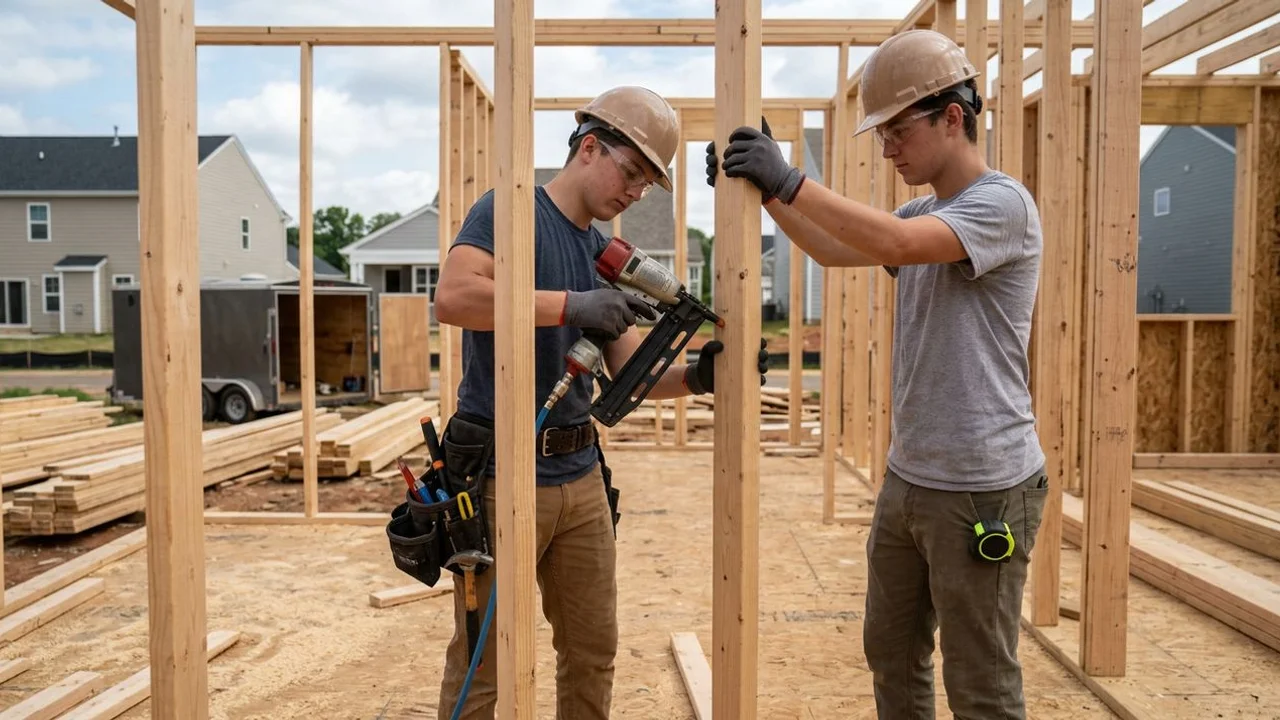
Reliable, skilled tradespeople are in short supply, and Charlotte's residential and multifamily building keeps demand for carpenters strong.
GiveNGo does not run carpentry training. We connect people with partner training providers. This page describes what a quality carpentry pathway typically covers so you can compare programs and ask good questions.
A well-trained crew is the most valuable asset on any job site.
Quality programs usually cover rough framing, finish carpentry, blueprint reading and OSHA 10 safety training.
What to look for: tools and safety
Good programs start with job site protocols. Proper equipment handling prevents delays and injuries.
- Hand tools: Hammers, speed squares, levels, chalk lines, utility knives and tape measures, used with precision.
- Power tools: Circular saws, table saws and framing nailers, with supervised practice.
- Safety protocols: Ladder use, fall protection, kickback prevention and proper PPE.
- OSHA 10: Safety woven into every lesson, with OSHA 10 completion where the provider offers it.
What to look for: framing fundamentals
Framing is the structural backbone of a building. A solid frame prevents the drywall cracks and sagging roofs that plague poorly built structures. Quality programs focus on local residential building codes.
- Layout rules: Marking top and bottom plates accurately and using standard stud spacing such as 16 inches on center.
- Wall assembly: Building walls that are plumb, square and securely braced, then applying structural sheathing.
- Rough openings: Framing for doors, windows and mechanical chases with exact measurements.
- Joists and rafters: An introduction to floor joists and roof framing systems and how a structure carries weight.
What to look for: blueprint reading
Misreading plans wastes materials and money. A skilled carpenter who can read blueprints makes sure the final product matches the design. Programs should teach traditional plan reading and an awareness of digital plan tools, since job sites use both paper and digital drawings.
- Plan views: Floor plans, dimensions and structural layouts.
- Elevations: Exterior views that show finishes and siding details.
- Sections: Wall and roof sections that explain how the building goes together.
- Schedules: Door, window and finish schedules that keep material orders accurate.
What to look for: finish carpentry
Finish carpentry covers the visible details property owners notice most. Clean cuts and tight joints define the quality of an interior. Programs may practice coping inside corners so joints stay tight as seasonal humidity changes the wood.
- Door hanging: Hanging both pre-hung and slab doors.
- Trim work: Casing, baseboards and crown molding.
- Coping techniques: Inside corner cuts that avoid the gaps standard miter joints can leave.
- Cabinetry basics: Standards for level, secure cabinet installation in kitchens and bathrooms.
What comes after training
Charlotte residential and multifamily contractors hire carpenters into framing and finish crews. Outcomes and employer connections vary by provider, and no provider can promise a job. See carpenter careers and pay for the wage path and growth potential.
How GiveNGo helps
GiveNGo does not run carpentry training. We connect people with partner training providers in Charlotte-Mecklenburg.
- Tell us what you are looking for. Share your goals, your schedule and any questions about eligibility or funding.
- We match you with a partner provider. We look for a provider that fits your schedule, eligibility and funding situation.
- You move forward with support. We help you take the next step with the provider you choose.
Get matched with a provider. Availability, eligibility and funding vary by provider. GiveNGo cannot guarantee acceptance, funding or placement.
Common Questions
Does carpentry training cover rough or finish carpentry?
Will I learn to read blueprints?
Do I need my own tools for carpentry training?
Does GiveNGo teach carpentry?
Ready to explore carpentry training?
Tell us what you are looking for and we will match you with a partner training provider that fits.